
While I was in the District last week, we decided to make the hour or so drive to Gettysburg to see the famous battle sight there. Besides Perryville, Kentucky, I had never visited a Civil War battlefield--and of course Gettysburg is the most notable, it being the turning point of the war for the Union, and the backdrop for Lincoln's most famous address.
The town is kind of a quaint, throw-back little square of old brick buildings, with informative little markers in every nook and cranny. Still somewhat thriving, Gettysburg has a small-ish liberal arts college (founded in 1832) that boasts Dwight D. Eisenhower as a former member of its board of trustees. It's definitely one of those "cute historic towns" that they pack with jaunty public flower beds and bed and breakfasts, existing as near-stage setting for the tourists who come to see all the old cannons, monuments and graves scattered about. And speaking of graves: the other notable thing about the town of Gettysburg? Ghost tours. LOTS of ghost tours. Gettysburg has ghost tours like Myrtle Beach has putt putt courses: there's one on every corner.
Anyway, it was pretty impressive out in the field. Aside from seeing big marble monuments rising up every so often (erected by the states who had troops involved in the battle, along with others honoring various regiments), you get the distinct impression that the landscape really hasn't changed much since 1863. There's still the sprawling countryside, low walls built of brick and wood, and the view of the Blue Ridge Mountains off in the distance. The National Parks service maintains the area, including the graveyard on Cemetery Hill, which is where Lincoln delivered the Gettysburg address after the massive burial of over 28,000 soldiers.
One other highlight from the trip was our tour guide at Cemetery Hill: he was spectacularly terrible. The guy was a summer intern for the Parks Service, and he had a peculiar way with adjectives: that is, he ruthlessly abused them, which had a sort of breathlessly redundant, hypnotizing effect. You would want to turn away, but being stunned by his relentless beat-down of the English language, your senses were dulled into submission. He would also randomly interrupt himself to make disdainful interjections about what he saw people doing off in the distance. This confusing blend of historical and social commentary was pretty jarring: "...and that's why you see many numerous amounts of graves with--can you believe that lady's letting her kid do that??" Wha-huh? The entire group would all turn around.
This may sound nit picky, but it was a rather long tour, and this notably bad habit of his was combined with a tendency to talk so rapidly (or, as he would say "quick and rapid and really really fast, you guys") he would run out of breath, leaving him to pant his way through his speech. It was exhausting to witness. I wanted to run away, but the strange ranger-wannabe wizard held us all spell-bound. His take on the battle of Gettysburg was that it was "really really [gasp] REALLY bad and [wheeze] not good. You can't even [gasp] imagine it. REALLY, you can't--does that guy think he can park here??"



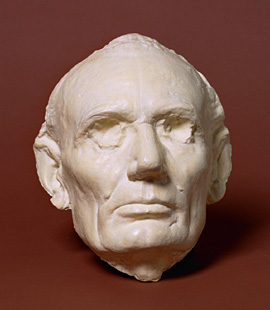 Volk's life mask of Lincoln, done in 1860
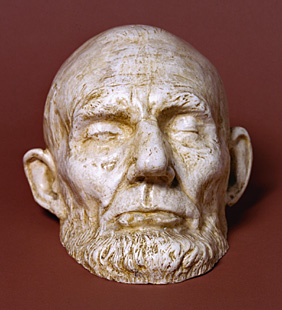 Mill's life m


 Posts
Posts


